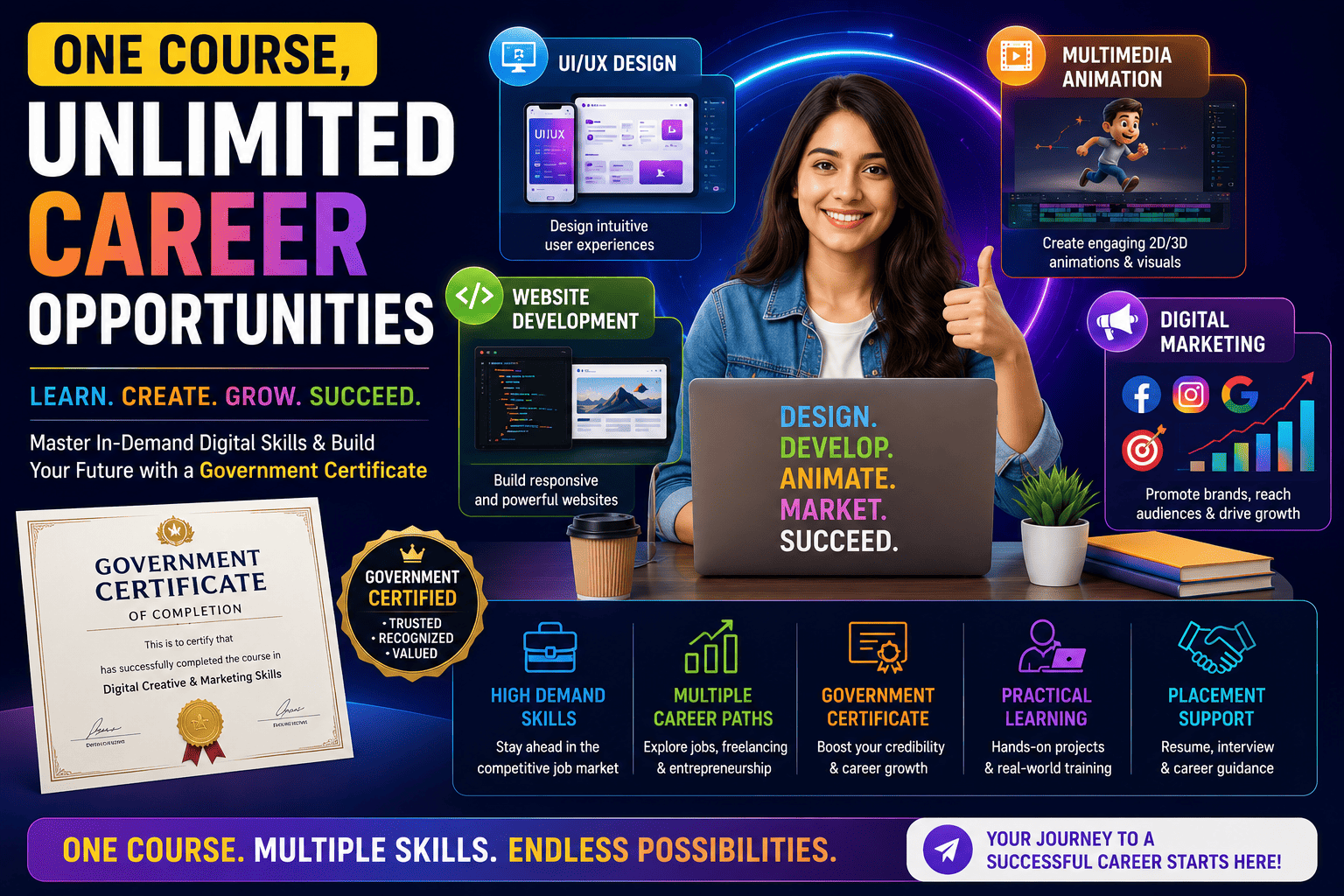
The digital economy is creating exciting career opportunities for professionals who can combine creativity, technology, and marketing. Instead of learning isolated skills, many employers now prefer candidates who understand the complete digital workflow—from designing user-friendly interfaces and developing responsive websites to creating engaging multimedia content and promoting brands through digital marketing.
A Government Certified Digital Creative Course that integrates UI/UX Design, Website Development, Multimedia Animation, and Digital Marketing helps learners build practical expertise, develop an industry-ready portfolio, and prepare for careers across technology, media, advertising, e-commerce, education, and startups. Whether you are a student, graduate, working professional, or entrepreneur, this all-in-one learning path can open doors to multiple career opportunities.
Why One Comprehensive Course Makes More Sense
The digital industry is becoming increasingly interconnected. A mobile application, website, or online campaign typically involves user research, interface design, development, visual storytelling, animation, and digital promotion.
Learning these disciplines together allows you to understand how each stage contributes to a successful digital product and helps you collaborate effectively with multidisciplinary teams.
Key Advantages
- Learn complementary skills under one structured program
- Build a strong professional portfolio
- Save time compared to studying multiple separate courses
- Improve employability across industries
- Prepare for freelancing and entrepreneurship
- Gain a recognized Government Certificate
- Develop confidence through hands-on projects
What You’ll Learn
1. UI/UX Design – Designing User-Centered Digital Experiences
UI/UX Design focuses on creating intuitive and visually engaging experiences for websites and mobile applications.
Skills Covered
- User Research
- Wireframing
- User Journey Mapping
- Interactive Prototyping
- Design Systems
- Responsive Interface Design
- Accessibility Principles
- Figma & Adobe XD
Career Opportunities
- UI Designer
- UX Designer
- Product Designer
- Interaction Designer
2. Website Development – Turning Designs into Functional Websites
Website development helps transform creative ideas into responsive and interactive digital experiences.
Technologies You’ll Learn
- HTML5
- CSS3
- JavaScript Fundamentals
- Bootstrap
- Responsive Web Design
- WordPress
- CMS Management
- Website Performance Optimization
Career Roles
- Web Designer
- Front-End Developer
- WordPress Developer
- Website Consultant
3. Multimedia Animation – Bringing Ideas to Life
Animation enhances storytelling and engagement across advertising, entertainment, education, and social media.
Modules Included
- 2D Animation
- Animation Principles
- Character Animation Basics
- Storyboarding
- Motion Design Fundamentals
- Audio Synchronization
- Multimedia Content Creation
Career Opportunities
- Multimedia Animator
- Animation Artist
- Motion Designer
- Visual Content Creator
4. Digital Marketing – Reaching the Right Audience
Digital marketing ensures that websites, brands, and multimedia content achieve measurable business results.
Topics Covered
- Search Engine Optimization (SEO)
- Search Engine Marketing (SEM)
- Social Media Marketing
- Content Marketing
- Email Marketing
- Google Analytics
- Performance Marketing
- Marketing Automation
Career Opportunities
- Digital Marketing Executive
- SEO Specialist
- Social Media Manager
- Content Strategist
- Performance Marketer
The Value of a Government Certificate
A Government Certificate can strengthen your professional profile by demonstrating that you have completed structured training aligned with recognized standards.
Benefits may include:
- Increased credibility during job applications
- Recognition of acquired skills
- Better confidence in interviews
- Support for career advancement
- Added value to your resume and portfolio
While certification is valuable, employers also place significant emphasis on practical skills, project experience, and problem-solving ability.
Why Practical Learning Matters
Employers increasingly look beyond certificates and focus on what candidates can actually build.
A quality course should include:
- Live industry projects
- Website design assignments
- UI/UX case studies
- Animation projects
- Digital marketing campaigns
- Portfolio development
- Internship opportunities
- Career guidance
Hands-on learning prepares you for real workplace challenges.
How These Skills Work Together
A typical digital project involves:
- Researching user needs
- Designing intuitive interfaces
- Developing responsive websites
- Creating engaging multimedia content
- Launching digital marketing campaigns
- Measuring performance using analytics
- Improving user experiences through continuous optimization
Professionals who understand this complete workflow are valuable contributors to modern digital teams.
Who Should Enroll?
This learning path is ideal for:
- Students after 10th or 12th
- College students
- Fresh graduates
- Working professionals
- Career changers
- Freelancers
- Entrepreneurs
- Startup founders
- Content creators
- Small business owners
No prior experience is required if the course begins with foundational concepts.
Industries Hiring Digital Creative Professionals
Organizations across sectors seek professionals with integrated digital skills, including:
- Information Technology
- E-commerce
- Advertising & Branding
- Media & Entertainment
- Education Technology
- Healthcare
- Financial Services
- Retail
- Hospitality
- Startups
- Corporate Communications
These industries rely on user-friendly digital products, compelling content, and effective online marketing.
Career Opportunities After Completing the Course
Graduates can pursue roles such as:
- UI/UX Designer
- Web Designer
- Front-End Developer
- WordPress Developer
- Multimedia Animator
- Motion Graphics Artist
- Digital Marketing Executive
- SEO Specialist
- Social Media Manager
- Creative Designer
- Content Creator
- Freelancer
- Digital Entrepreneur
Essential Skills You’ll Develop
Beyond technical expertise, you’ll strengthen:
- Design Thinking
- Visual Communication
- Creativity
- Problem Solving
- Project Management
- Team Collaboration
- Client Communication
- Analytical Thinking
- Time Management
- Adaptability
These transferable skills support long-term career growth.
Future Trends Driving Digital Careers
Professionals who continuously learn remain competitive as technology evolves. Key trends include:
- AI-assisted design and development
- Interactive user experiences
- Motion-based storytelling
- No-code and low-code platforms
- Marketing automation
- Personalized digital experiences
- Data-driven design decisions
- Cross-functional creative roles
Keeping your skills current helps you adapt to changing industry demands.
Frequently Asked Questions (FAQs)
1. Why should I choose a course that combines multiple digital skills?
Learning complementary disciplines allows you to understand the complete digital workflow, making you more versatile and better prepared for multidisciplinary roles.
2. Is this course suitable for beginners?
Yes. A structured curriculum that starts with fundamentals and gradually progresses to advanced concepts is suitable for beginners as well as professionals seeking to upskill.
3. What is the advantage of earning a Government Certificate?
A Government Certificate can enhance your resume by providing formal recognition of your training. Combined with a strong portfolio and practical experience, it can strengthen your professional profile.
4. Can I freelance after completing this course?
Yes. Skills in UI/UX design, website development, animation, and digital marketing can support freelance opportunities across a variety of industries and client projects.
5. Which software and tools are commonly taught?
Courses often include Figma, Adobe XD, Photoshop, Illustrator, HTML, CSS, JavaScript, WordPress, Google Analytics, and other industry-standard tools, depending on the curriculum.
6. What industries hire professionals with these skills?
Technology, media, advertising, education, healthcare, finance, retail, startups, and e-commerce companies all hire professionals with multidisciplinary digital expertise.
Conclusion
As businesses continue to invest in digital transformation, professionals who can design, develop, animate, and market digital products are becoming increasingly valuable. Choosing one comprehensive course that combines UI/UX Design, Website Development, Multimedia Animation, and Digital Marketing, along with a Government Certificate, provides a practical pathway to building versatile, future-ready skills.
Success, however, depends on more than completing a course. Focus on hands-on practice, real-world projects, portfolio development, and continuous learning to stay relevant in an evolving digital landscape. By combining recognized training with practical experience, you can unlock opportunities in employment, freelancing, entrepreneurship, and long-term career growth.